Bloating is one of the most common everyday digestive complaints. Here is what is actually going on, and the ordinary habits that tend to make a difference.
What is bloating?
We all have experienced bloating at some point. But what is it exactly? Bloating refers to a condition when your stomach feels tight and full. Bloating is often confused with other causes of a more pronounced belly, like abdominal wall laxity or looseness. You experience a bloated stomach when your gastrointestinal (GI) tract is filled with air or gas. Bloating is frequently accompanied by:
- Discomfort
- Excessive gas (flatulence)
- Gut rumbling or gurgles
- Frequent belching or burping
Each of us bloats differently and at different times, and the sensitivity of your intestine influences how balloon-like your abdomen may become. People with Irritable Bowel Syndrome (IBS) or other gut disorders are more likely to experience this increased sensitivity, thus a bloated stomach.
What are the top bloating causes?
Do you want to get rid of your bloated stomach? Before dealing with your bloating, it is crucial to understand the top bloating causes. Here are some of the most common bloating causes:
Gas
Gas is one of the most common bloating causes. Undigested food or swallowed air breaks down in your digestive tract, leading to gas accumulation. Swallowed air leaves the body in two ways: by burping and by flatulence. Bloating and abdominal distension can also be caused by gas buildup and slow gas transport from the stomach.
Digestive issues
Constipation, food allergies, and intolerances are some common bloating causes. Bloating and discomfort can occur when the large bowel becomes clogged with stool. The bloating might get worse if extra gas accumulates behind the stool.
Unhealthy diet
Did you know your diet could be responsible for your bloated stomach? An unhealthy diet is one of the leading bloating causes. Consuming fizzy drinks, eating too much salt or sugar or not getting enough fiber in your diet can all lead to a bloated stomach.
Hormonal changes
Fluctuations in your hormone levels can also lead to a bloated stomach. Due to hormonal changes and water retention, many women experience bloating before and during their periods.
Everyday habits that tend to make a difference
Most everyday bloating comes down to how, what and how fast you eat, so the changes worth trying are ordinary ones. Here is what is most commonly suggested:
Exercise
Gentle movement after a meal is the change most people are pointed to first. A short walk is the usual suggestion, and restorative forms of yoga are a common alternative. A clinical review of bloating looked at light physical activity and the transit of gas through the digestive tract, and it is the paper most often cited on this point.
Avoid high-fat foods
Because fats take longer than most other foods to digest and can delay stomach emptying, the body breaks down fats slowly. This can lead to a bloated stomach. Cutting back on very fatty meals, and leaning harder on fresh fruit and vegetables, is therefore a common suggestion.
Where moringa fits
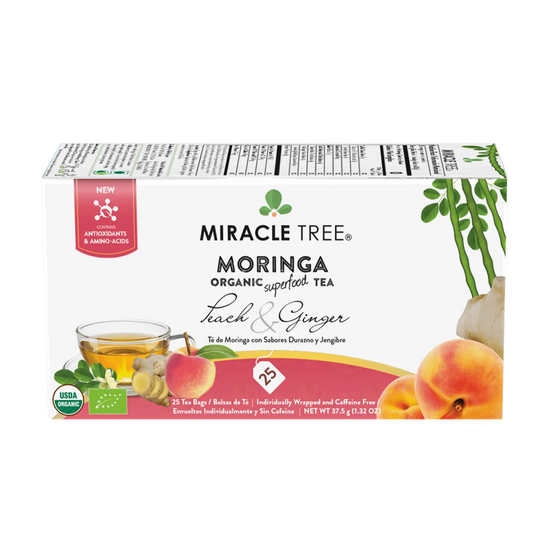
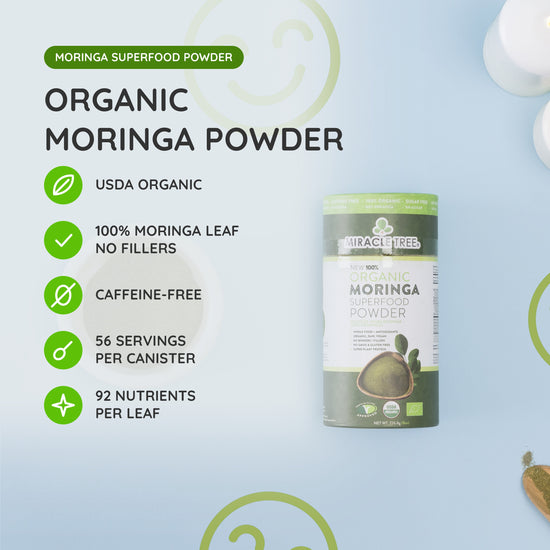
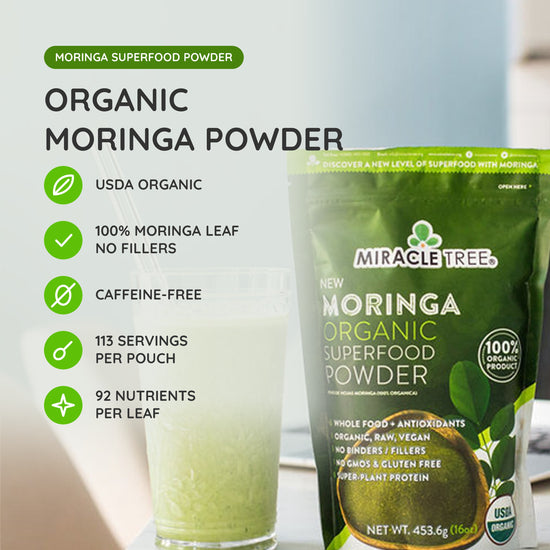
Honestly: moringa is not a remedy for this, and we are not going to pretend otherwise. What moringa is, is a dark leafy green — and like other dark greens it brings both soluble and insoluble fibre to the plate, along with vitamins A, C and D, several B vitamins, calcium, potassium and iron. Dietary fibre contributes to normal bowel function, and most people eat well under the amount that is recommended. If your diet is short on greens, adding some is a sensible thing to do on its own terms, quite separately from what your stomach happens to be doing this week.
These statements have not been evaluated by the Food and Drug Administration. These products are not intended to diagnose, treat, cure, or prevent any disease.