







Mix into smoothies, lattes and baking. The price is already marked down, no code needed.


Miracle Tree's Blog
Mindfulness Meets Moringa: How to Build a Morning Ritual
 By Kunal Mirchandani
· 6 min read
At Miracle Tree, we think the first twenty minutes of the day set the tone for everything after it. A morning ritual doesn't have to be elaborate to matter — a kettle, a cup, and a few unhurried minutes are enough. Pair that with a nutrient-dense leaf like moringa and you have something small, repeatable, and genuinely worth getting out of bed for.
Here's how to build one, from the leaf up.
What Moringa Actually Is
Moringa oleifera is a fast-growing tree native to the foothills of the Indian subcontinent, where its leaves have been eaten as an everyday vegetable for centuries. It picked up the nickname "the miracle tree" long before anyone was putting it in tea bags.
Miracle Tree uses the leaf only — hand-picked on family-owned farms in Sri Lanka's rainforest belt, solar-dried, then either cut for tea or milled into powder. Nothing is extracted, isolated, or concentrated; what's in the cup is the whole dried leaf. Our farms are USDA and EU Organic certified, and we buy directly from the growers under a bought-leaf model that returns up to 70% of the purchase value to the farms themselves.
What's in the leaf
Dried moringa leaf carries vitamins, minerals, antioxidants, and all nine essential amino acids, which makes it a complete plant protein — unusual for a leafy green. Per 100 g of dried leaf, the brand's published composition figures are:
- Protein — 27 g
- Calcium — 2,000 mg
- Iron — 28 mg
- Vitamins A and C — a source of both
Gram for gram against fresh foods, that's roughly 17x the calcium of milk, 10x the iron of spinach, and 3x the potassium of bananas.
One honest note, because it's the thing most moringa articles skip: those comparisons are per 100 g of dried leaf against 100 g of a fresh food that is mostly water. A realistic serving is 2 teaspoons of powder (4 g), which delivers about 10% DV iron, 10% DV calcium, and 6% DV of vitamins A, C and B1. Moringa is a meaningful, easy addition to a varied diet — it isn't a multivitamin, and it isn't meant to replace one.
Start With a Sip: Tea for Mindful Mornings
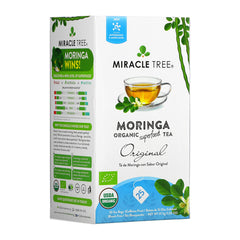
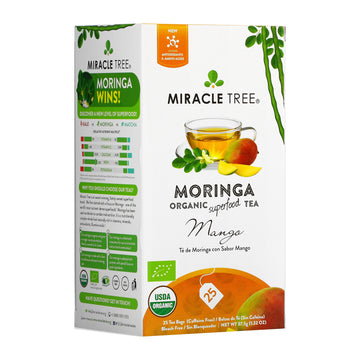
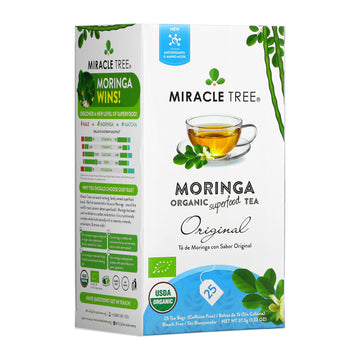
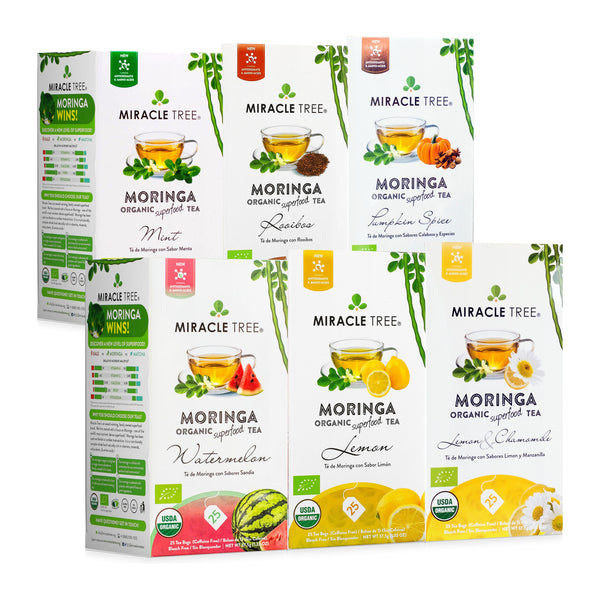
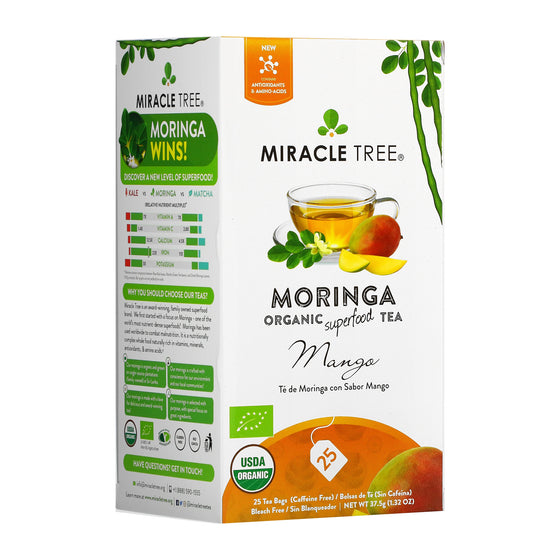
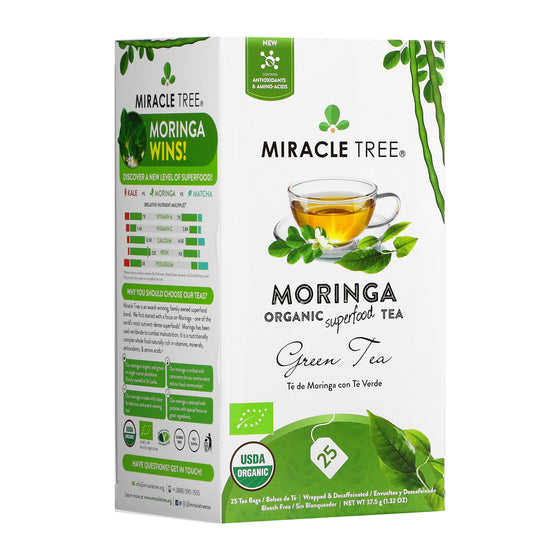
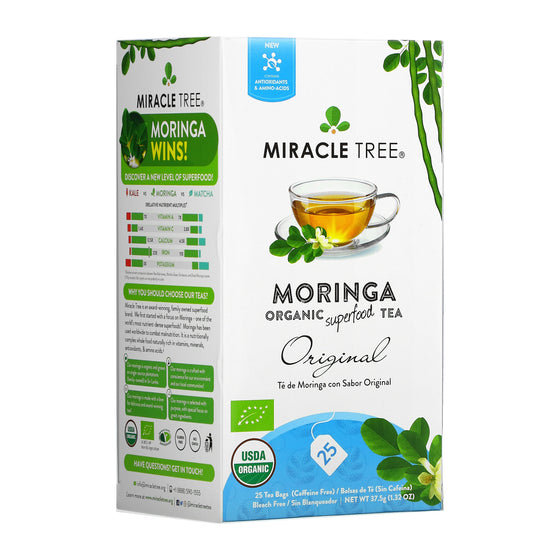
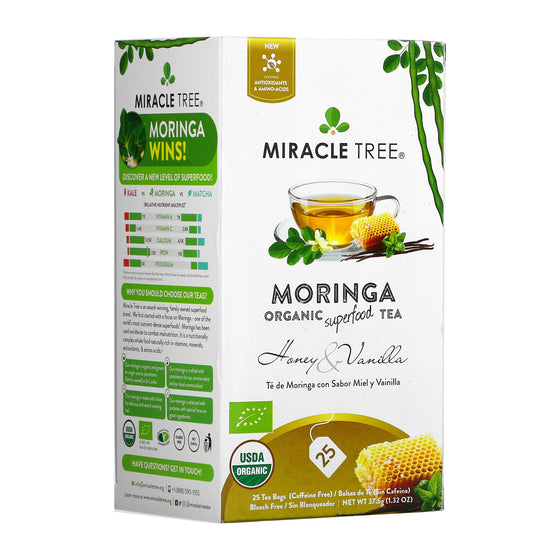
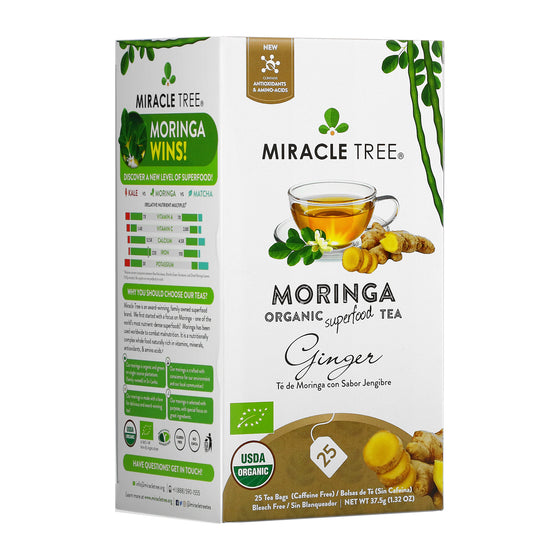
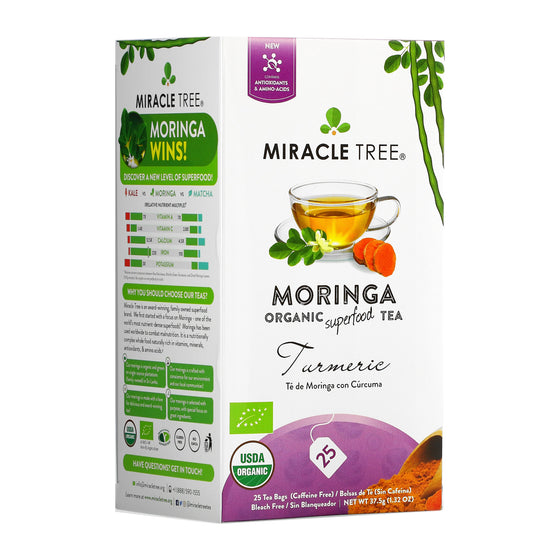
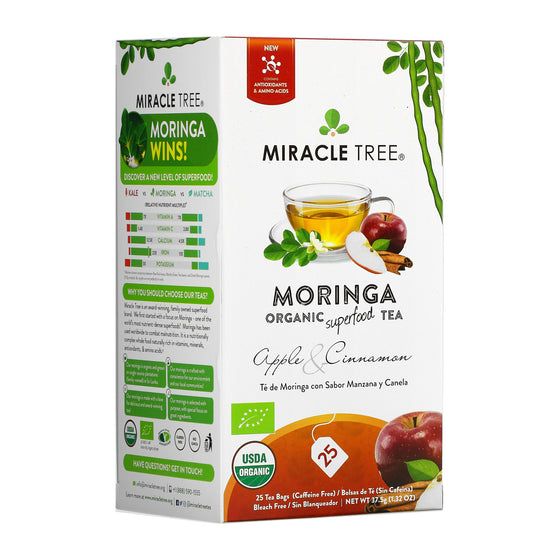
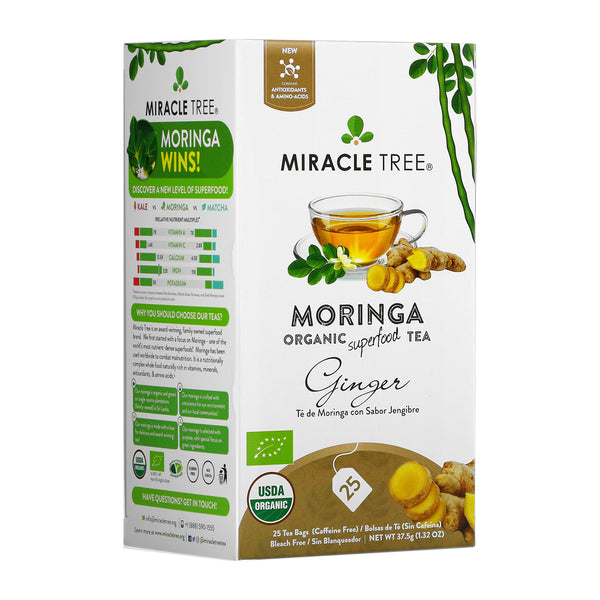
Begin with a cup of Original Moringa Herbal Tea — clean, grassy, faintly peppery, closer to a good sencha than to anything bitter. If you'd rather ease in, Honey Vanilla rounds the edge off with a soft, dessert-like sweetness, and Lemon Chamomile keeps things bright and floral. For a quiet cup to go with the ritual, see our moringa tea recipes.
How to brew it properly
- Water: freshly boiled. Moringa leaf is forgiving — unlike green tea, it won't turn astringent in boiling water.
- Time: 4–5 minutes. Four gives you a lighter, green cup; five pulls out more body and a deeper colour.
- Cover it. A saucer over the cup while it steeps keeps the aromatics in. It makes a real difference on the floral blends.
- Second steep: our bags hold up to a second infusion. Give it an extra minute.
Use the steeping time as the ritual, not the dead space before it. Four to five minutes is almost exactly the length of a short breathing exercise, a page of journalling, or a stretch sequence. The tea gives the pause a shape.
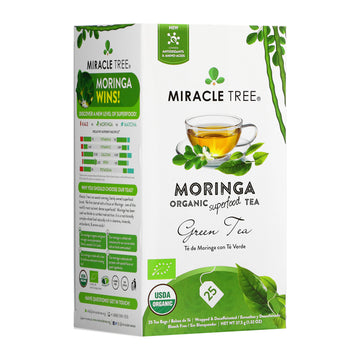
Moringa leaf is naturally caffeine-free, which is the point for a lot of people who drink it first thing: no caffeine to count, and no reason not to have a second cup. It's also a plant source of iron and B vitamins. Iron contributes to normal oxygen transport, and iron and B vitamins contribute to normal energy-yielding metabolism. (Two exceptions worth knowing: our Green Tea blend has under 1 mg of caffeine and our Earl Grey has 5–10 mg. Every other herbal blend is caffeine-free.)
Try moringa tea


Blend It Instead: Moringa Smoothies and Bowls
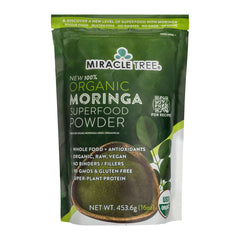
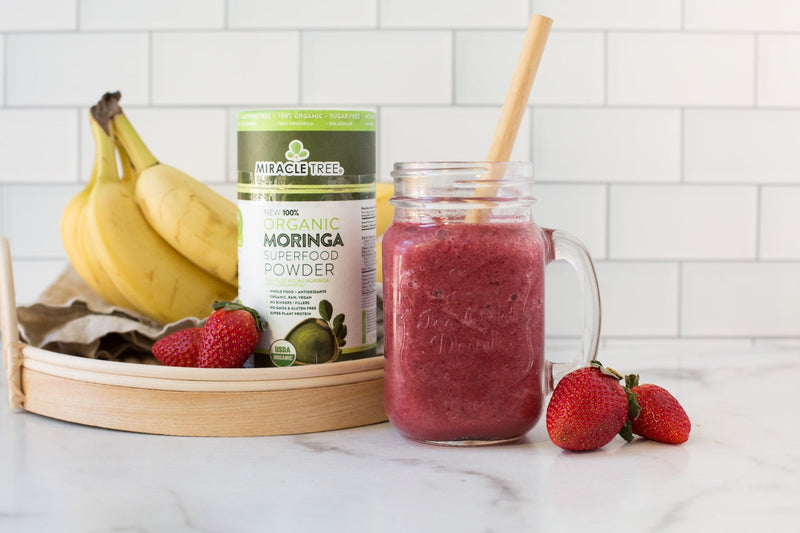
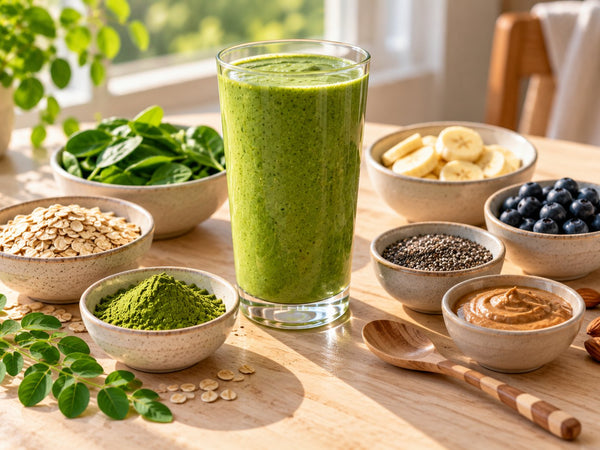
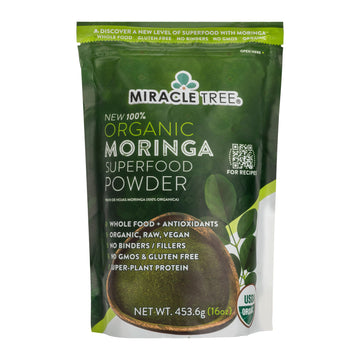
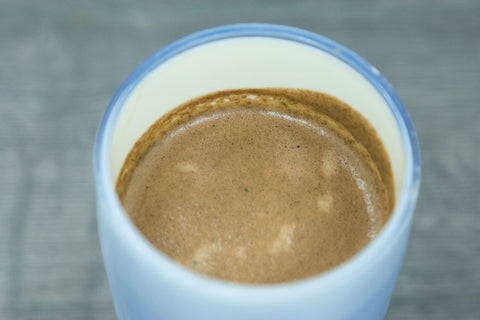
Prefer something cold? A teaspoon of 8 oz Organic Moringa Powder disappears into a smoothie without fighting the fruit. Moringa's flavour is green and mildly peppery, so it pairs best with something sweet and something acidic.
Moringa Morning Smoothie
- 1 banana (frozen, if you want it thick)
- ½ cup frozen mango
- 1 tsp Miracle Tree Moringa Powder
- 1 cup almond milk
- A squeeze of lime
- Optional: fresh ginger, chia seeds, a handful of spinach
Why it works: mango's sweetness and lime's acid sit on either side of moringa's green note and keep it from dominating. Start with one teaspoon — moringa is assertive, and it's easier to add more next time than to rescue a batch you've overdone.
Moringa is also high in fibre and contains chlorophyll and isothiocyanates, compounds found naturally in the leaf. As part of a varied diet, fibre-rich foods promote digestive comfort and regularity.

Build a Ritual, Not Just a Routine
A routine is a list of things you do. A ritual is a list of things you notice. The difference is mostly attention, and attention is the part that survives a busy week.
While your tea steeps, pick one:
- Close your eyes and take five slow breaths — four counts in, six out.
- Write down three things you're grateful for. Specific ones; "coffee" beats "my life."
- Name one thing you want the day to contain. Not a to-do list — one thing.
- Stand up and stretch through whatever is stiff. Two minutes is plenty.
The tea isn't doing this work. It's the timer, the cue, and the reason you stayed at the counter instead of reaching for your phone.
Small Changes, Compounded
Consistency is what makes a modest habit matter. A cup a day is 365 cups a year, and the nutritional contribution is real, if modest, in exactly the way a good daily habit is supposed to be. More to the point, it's a repeatable commitment to slowing down — and that part is free.
Ready to build your own? Explore our Herbal Moringa Teas, our naturally caffeinated Energy Teas for the mornings that need one, and our Superfood Powders.
Explore More
Sources
- Gopalakrishnan, L., Doriya, K., & Kumar, D. S. (2016). Moringa oleifera: A review on nutritive importance and its medicinal application. Food Science and Human Wellness, 5(2), 49–56.
- Leone, A. et al. (2015). Cultivation, Genetic, Ethnopharmacology, Phytochemistry and Pharmacology of Moringa oleifera Leaves: An Overview. International Journal of Molecular Sciences, 16(6), 12791–12835. https://doi.org/10.3390/ijms160612791
- Saini, R. K., Sivanesan, I., & Keum, Y. S. (2016). Phytochemicals of Moringa oleifera: a review of their nutritional, therapeutic and industrial significance. 3 Biotech, 6(2), 203.
These statements have not been evaluated by the Food and Drug Administration. This product is not intended to diagnose, treat, cure, or prevent any disease.
Always consult a healthcare professional before making changes to your diet, especially if you are pregnant, nursing, or managing a medical condition.

Shop moringa teas
View all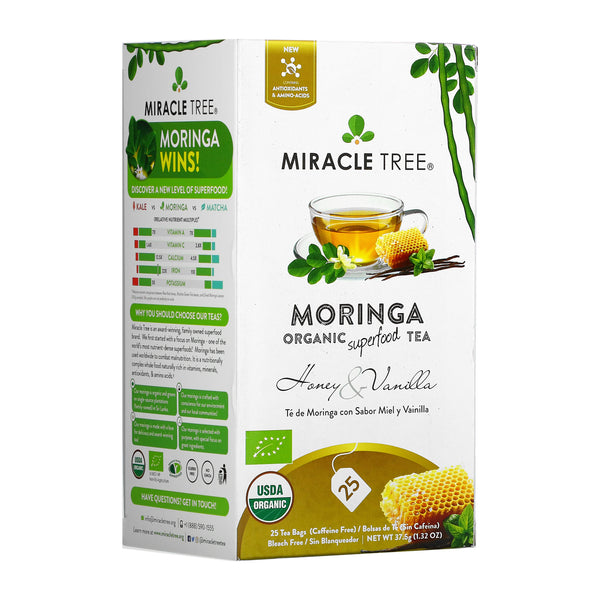

Organic Moringa Tea - Original
From £7.00
Shop: Organic Moringa Tea - Original
Important Reminders
Remember to always consult your healthcare provider before making any significant changes to your diet. While moringa is generally safe for consumption, it's essential to be aware of any potential allergies or interactions with medications.


