



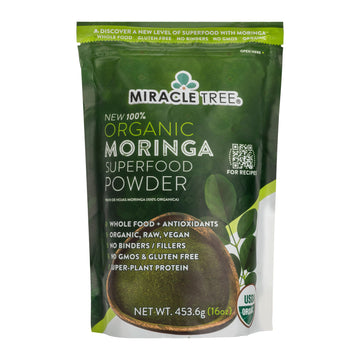
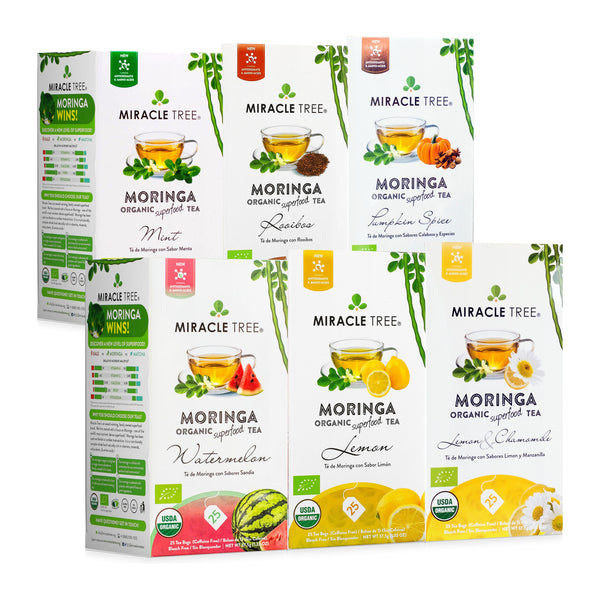


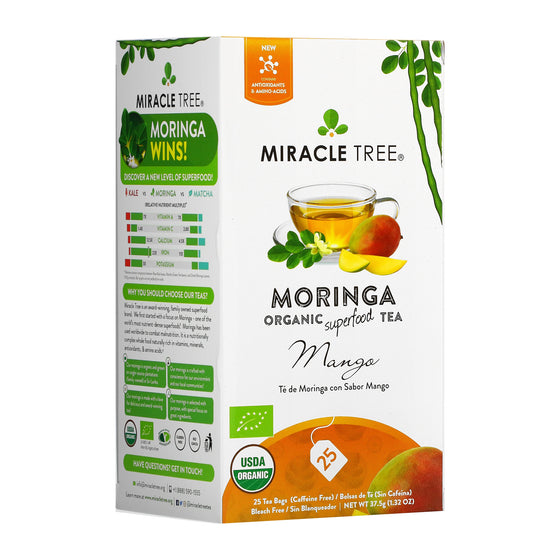
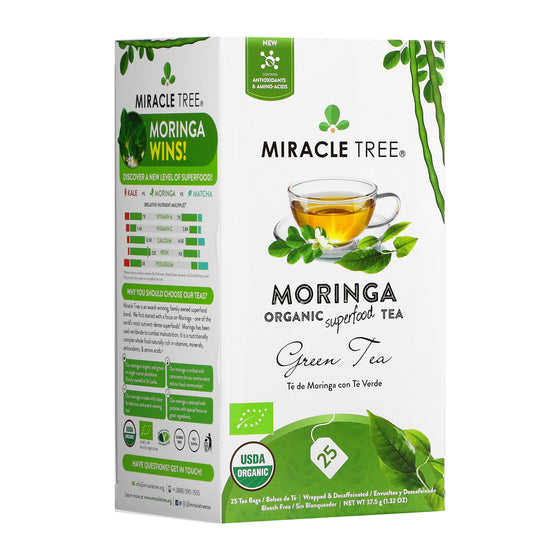
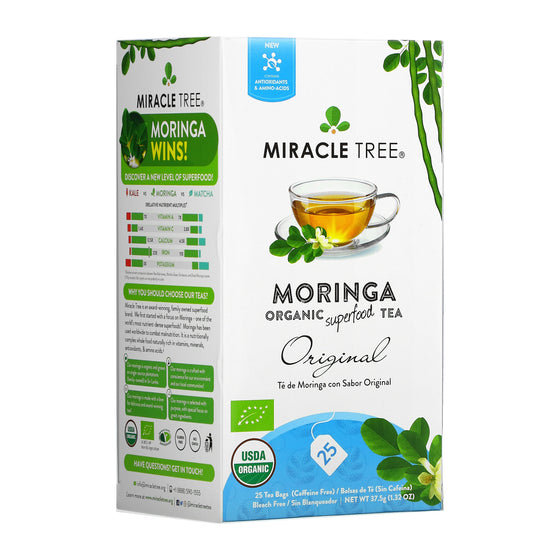
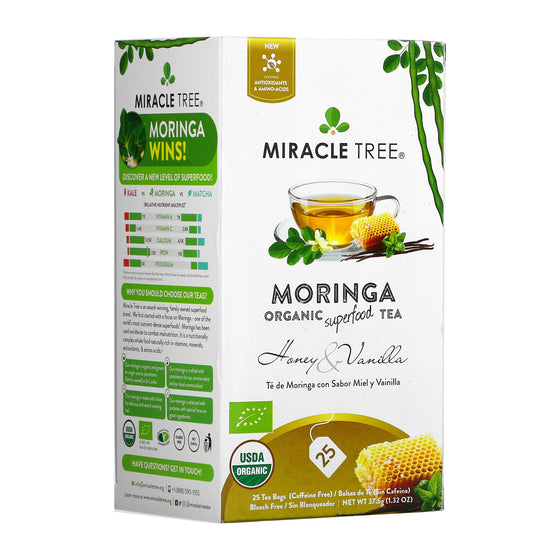
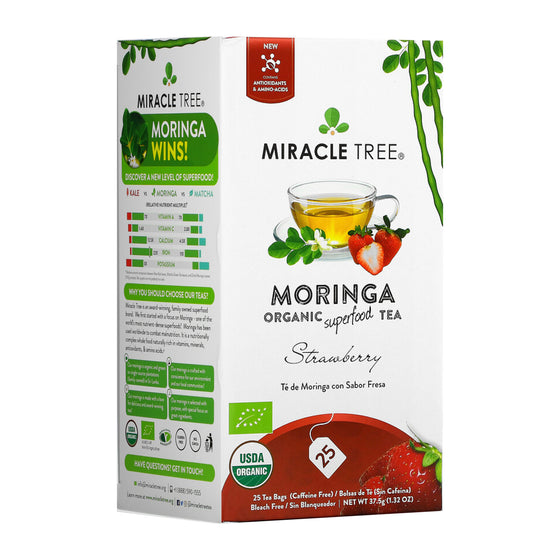
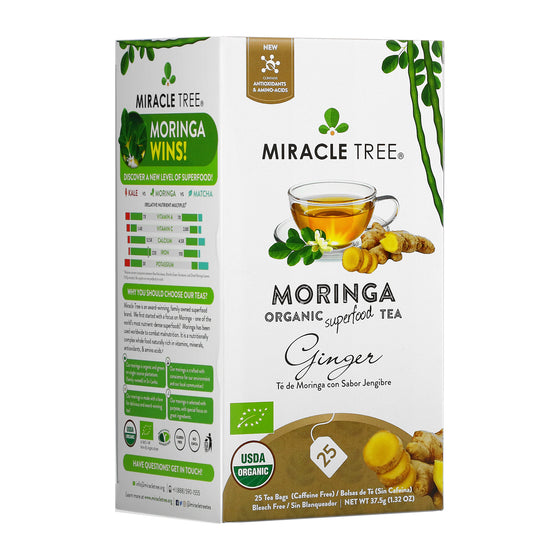





Mix into smoothies, lattes and baking. The price is already marked down, no code needed.


Miracle Tree's Blog
Moringa and Gratitude: Cultivating Thankfulness for National Gratitude Month
 By Kunal Mirchandani
· 3 min read
November is National Gratitude Month, a time to reflect on what we are thankful for and to build a little appreciation into daily life. For a lot of our customers that daily ritual includes a cup of moringa tea. Here is what moringa actually is, what is in the leaf, and why a small repeated ritual is worth keeping. For a more lyrical take, read a poetic ode to moringa.
What is moringa?
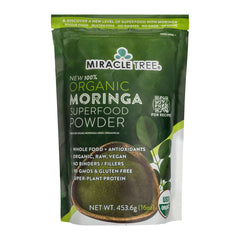
Moringa oleifera is a tropical tree native to South Asia and Africa, long valued in the regions where it grows for the nutrient density of its leaves. Our leaves are grown organically on single-source farms near the rainforests of Sri Lanka, sun-dried, and packed into 20 herbal tea flavours and an organic powder.
What is in the leaf
Moringa leaf is unusually nutrient-dense for a plant food. Per the nutrition panel on our own packaging, moringa leaves are naturally rich in vitamins, minerals and antioxidants, with all nine essential amino acids. Among them:
- Vitamins A, C and E
- Calcium, potassium and plant-based iron
- Antioxidants, including polyphenols and flavonoids
- All nine essential amino acids, which is rare in a leafy plant
As part of a balanced diet, moringa contributes to your daily intake of those nutrients.*

Try moringa tea


Gratitude and a daily ritual
Practising gratitude means noticing and appreciating the good things already present. It works best when it is attached to something you already do every day, which is where a cup of tea earns its place: the kettle, the few minutes of steeping, the first sip. That is a built-in pause. Related: Moringa and Mental Clarity: What the Nutrients Actually Do.
Several of our long-term customers describe exactly this. Reviewers routinely tell us they have been drinking the same cup every morning for years — not as a treatment for anything, but as a small fixed point in the day.
Three ways to pair the two
- Brew, then write one line. While the tea steeps, write down a single thing you are grateful for. Four or five minutes is plenty of time.
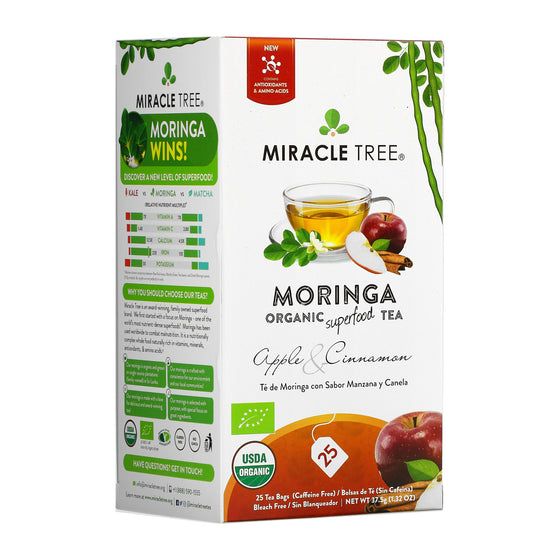
- Pick a flavour for the mood. Lemon & Chamomile and Mint suit a slow evening; Apple & Cinnamon suits a November morning.
- Share the cup. Gratitude research keeps landing on the same finding — expressed gratitude sticks better than private gratitude. Make two cups.
Which one should you start with?
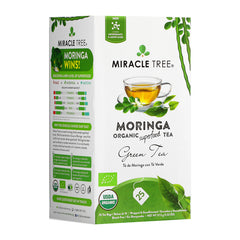
If you have never had moringa, read what moringa tea actually tastes like first — it is greener and more earthy than most herbal teas, and it is worth knowing that going in. If you are drinking it in the evening, check which flavours are caffeine-free: all our herbal teas are, with Green Tea and Earl Grey the two exceptions.
* These statements have not been evaluated by the Food and Drug Administration. This product is not intended to diagnose, treat, cure or prevent any disease.

Shop moringa teas
View all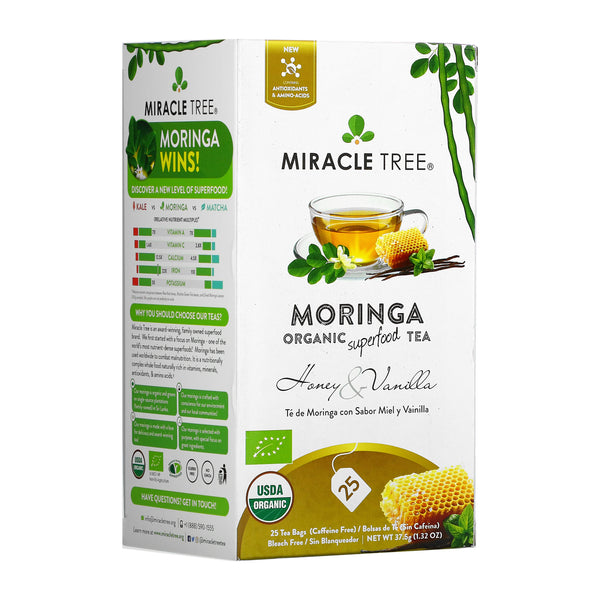
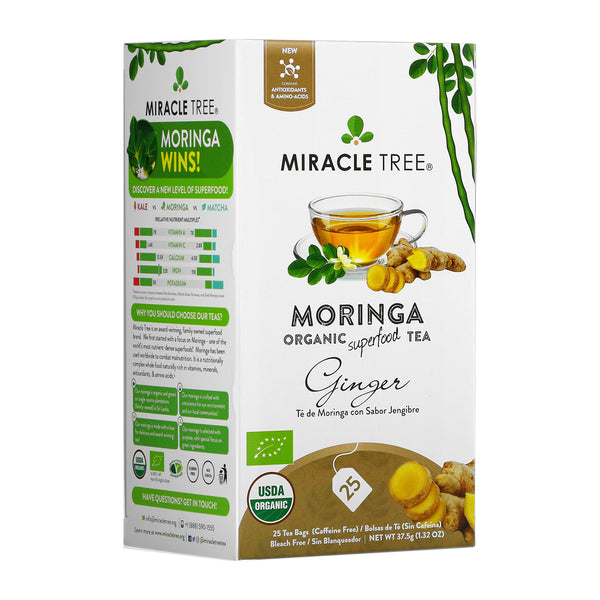

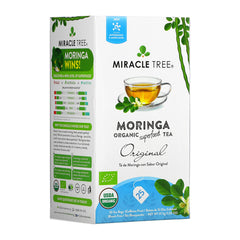
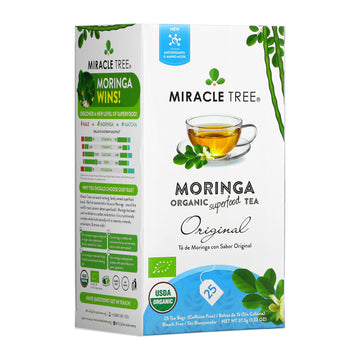
Organic Moringa Tea - Original
From £7.00
Shop: Organic Moringa Tea - Original
Important Reminders
Remember to always consult your healthcare provider before making any significant changes to your diet. While moringa is generally safe for consumption, it's essential to be aware of any potential allergies or interactions with medications.


