Three high-protein breakfasts worth getting up for - plus how much protein a morning meal actually needs.
Breakfast is also the meal people skip most often, and the one they most often build entirely out of refined carbohydrate: toast, cereal, a pastry on the way in. The result is a meal that digests fast and leaves you hungry by ten. Loading the first meal of the day with protein is the simplest fix, because protein takes longer to digest and is the macronutrient most consistently linked with feeling full.
How much protein is "high protein" at breakfast?
A useful working target is 20-30 g of protein in the morning meal. For reference, that's roughly:
- 3 large eggs (about 18 g)
- 1 cup of Greek yogurt (about 20 g)
- ½ cup rolled oats plus a scoop of protein powder (about 25 g)
- Two eggs on whole grain toast with a little cheese (about 20 g)
Most conventional breakfasts land at 5-10 g, which is why the change is noticeable.
What a protein-forward breakfast does
-
A 2014 study of high-protein breakfasts in adolescents found that higher-protein morning meals were associated with greater fullness and reduced hunger later in the day, compared with lower-protein breakfasts of the same calories.
- Protein slows gastric emptying, which means the carbohydrate eaten alongside it is absorbed more gradually - part of why a protein-forward breakfast tends to hold you steadier through the morning.
-
A 2012 review found that higher dietary protein intake supports gains in muscle mass and strength during resistance training. Spreading intake across the day, rather than loading it all into dinner, is the pattern most often recommended.
Where moringa fits
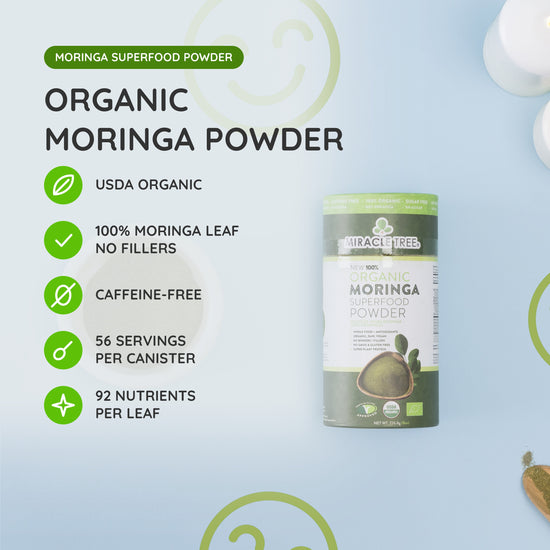
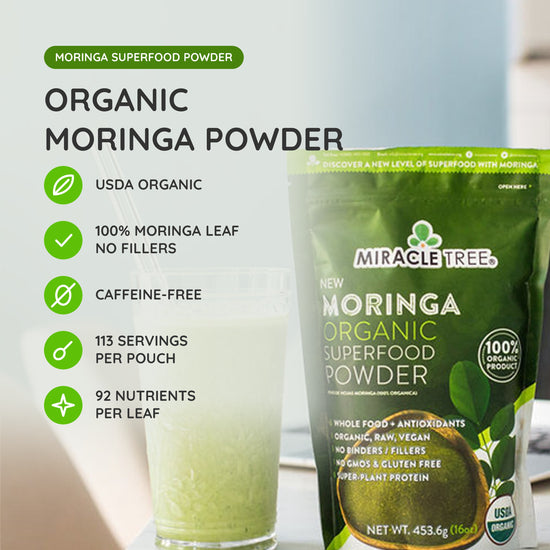
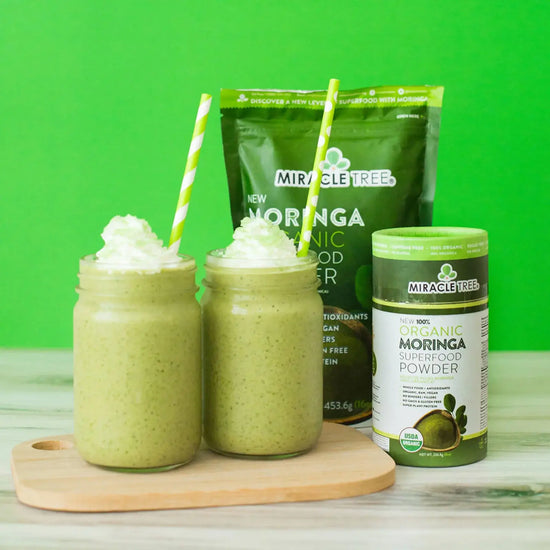
Moringa leaf is a complete plant protein - it contains all nine essential amino acids, which few single plant foods do - and it also brings iron, calcium, vitamin A and vitamin C. It won't carry the protein total on its own at the doses you'd actually use, and we won't pretend otherwise: a 4 g serving of powder is about 1 g of protein. What it does well is round out the nutrient profile of a breakfast whose protein is coming from eggs, yogurt or a protein powder, and add a green, faintly peppery note that cuts richness.
One handling note that applies to all three recipes: add moringa off the heat or into cold ingredients. Cooked hard, it goes dull and bitter.
Scrambled eggs with spinach, tomatoes and moringa
Serves 2. About 20 g of protein per serving.
Eggs are an excellent source of protein - roughly 6 g in a large egg - and they contain all the essential amino acids. Spinach adds carotenoids, vitamins C and K, folate, iron and calcium. Moringa layers in more of the same minerals plus its green, peppery finish.
Ingredients:
- 1 tablespoon olive oil
- 3 tomatoes, halved
- 2 eggs
- 2 egg whites
- 4 tablespoons yogurt
- 1 tablespoon moringa powder
- ⅓ cup basil, chopped
- 1½ cups spinach
- ½ teaspoon salt
- ½ teaspoon pepper
Preparation:
- Beat the whole eggs and whites with the yogurt, moringa powder, three tablespoons of water, salt, pepper and basil. Mixing the powder into the raw egg is what keeps it from clumping later.
- Heat a teaspoon of the oil in a non-stick pan. Add the tomatoes cut-side down and cook over medium heat until they collapse slightly. Transfer to a serving plate.
- Add the spinach to the pan and let it wilt, stirring occasionally. Transfer to the plate.
- Heat the rest of the oil over low heat and pour in the egg mixture. Stir slowly and often until just set - low and slow is what makes scrambled eggs creamy rather than rubbery, and it also protects the moringa.
- Spoon the eggs over the spinach and tomatoes.
Protein pancakes
Serves 1-2. About 30 g of protein for the batch.
Quick enough for a weekday, good enough for a slow Sunday. The banana does most of the sweetening, so there's no sugar in the batter.
Ingredients:
- 1 scoop protein powder
- 2 eggs
- ¼ cup almond milk
- 2 teaspoons moringa powder
- 1 large very ripe banana
- ⅛ tsp cinnamon
- ¼ tsp baking powder
- ¼ tsp salt
Preparation:
- Set a skillet over medium-low heat and let it come up to temperature for 2-3 minutes.
- Mash the banana thoroughly, then whisk in the remaining ingredients. Sift the moringa and baking powder in rather than tipping them - both clump.
- Pour into small circles. Small is important: protein-powder batters are fragile and a large pancake tears when you flip it.
- Cook 2-3 minutes a side, until golden. Watch them - moringa and protein powder both brown faster than flour.
- Serve hot with maple syrup, honey or Greek yogurt.
Overnight moringa oatmeal
Serves 4. About 12 g of protein per serving on its own; add Greek yogurt or a scoop of protein powder to reach 25 g.
Moringa is a complete protein and a source of antioxidant plant compounds; oats bring soluble fiber; the nuts add fat, protein and crunch. Ten minutes of work.
Ingredients:
- 3 cups gluten-free rolled oats
- 4 cups almond milk
- 3 tablespoons maple syrup
- 2 teaspoons vanilla extract
- 2-3 teaspoons moringa powder
- ⅓ cup pistachios, chopped
- ⅓ cup almonds
- ¼ cup unsweetened shredded coconut
Preparation:
- Combine the oats, almond milk, vanilla and maple syrup in a pan.
- Cook over low to medium heat for 7-10 minutes, until the oats have softened.
- Take the pan off the heat, then stir in the moringa powder, pistachios, almonds and coconut.
- Serve warm, or refrigerate in jars for up to four days and eat cold - it thickens overnight, so loosen with a splash of milk.
Build the morning around protein and the rest of the day tends to look after itself. Try one of these, then adjust the ratios to your own appetite - that's the part no recipe can do for you.
We value your safety and encourage you to practice safe food preparation habits. Please visit our Food Safety resource for more information before trying to recreate any of our recipes.
*These statements have not been evaluated by the Food and Drug Administration. This product is not intended to diagnose, treat, cure, or prevent any disease.