


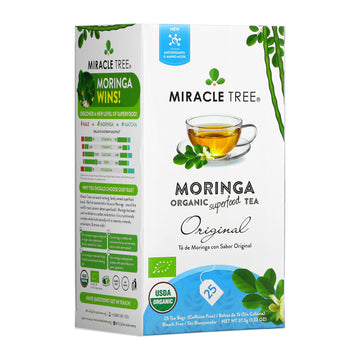
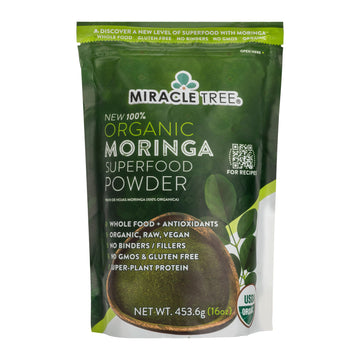
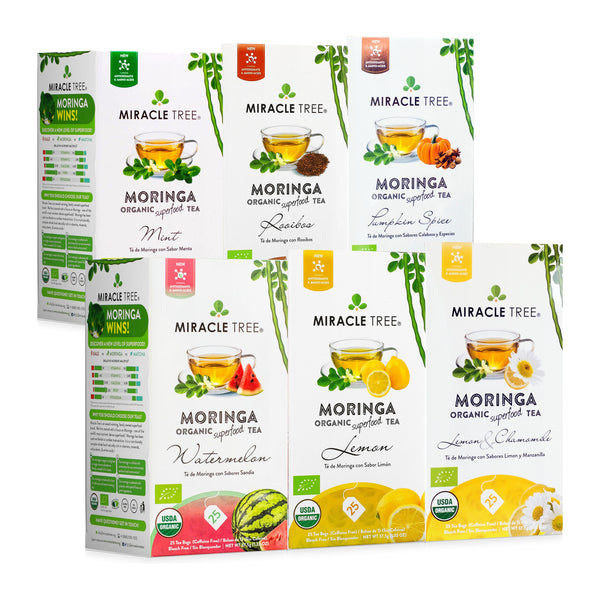


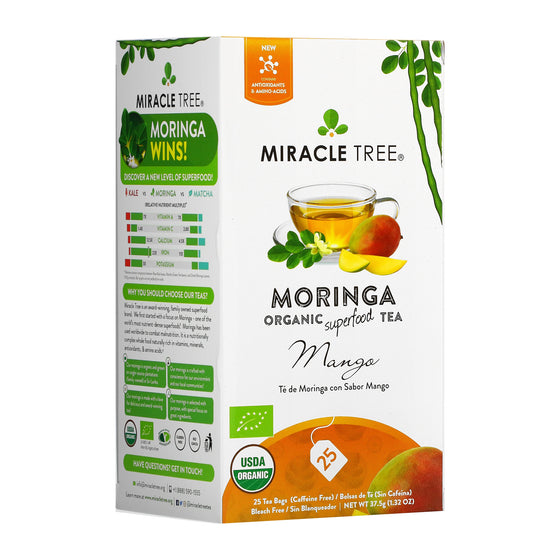
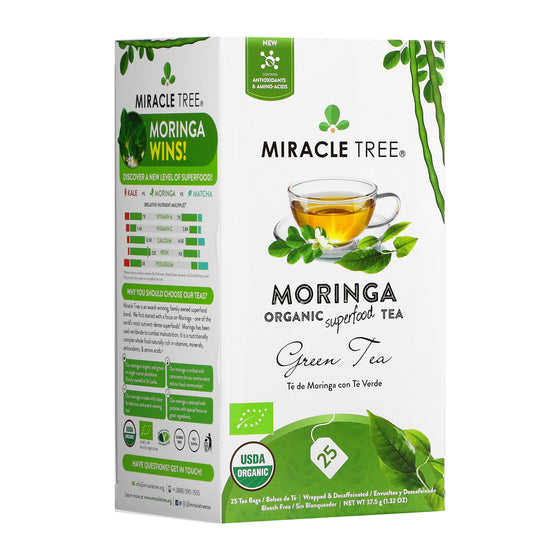
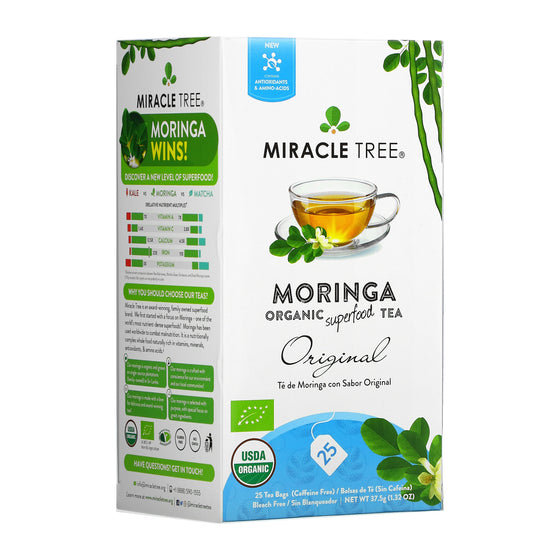
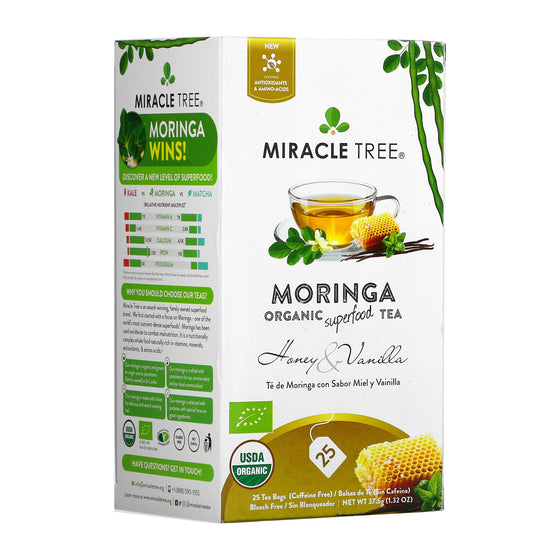
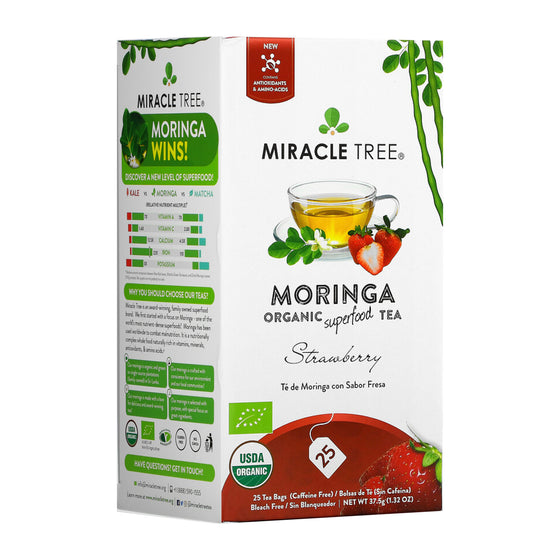
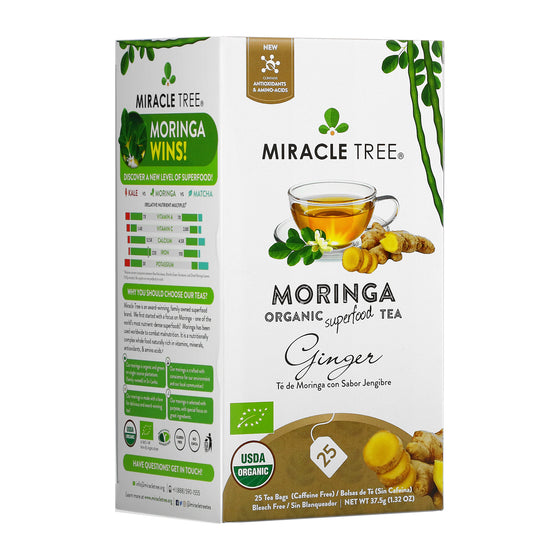
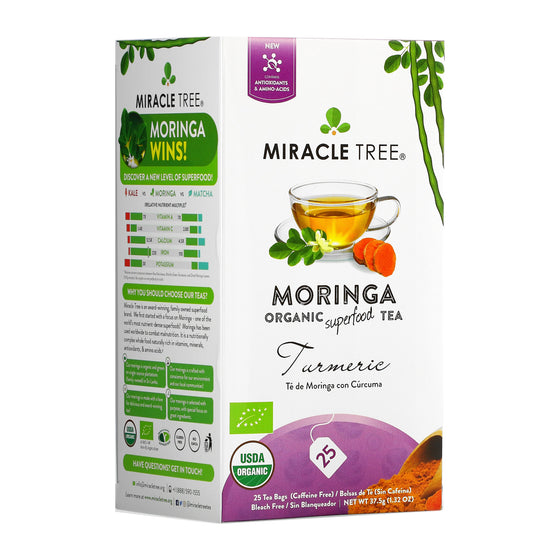
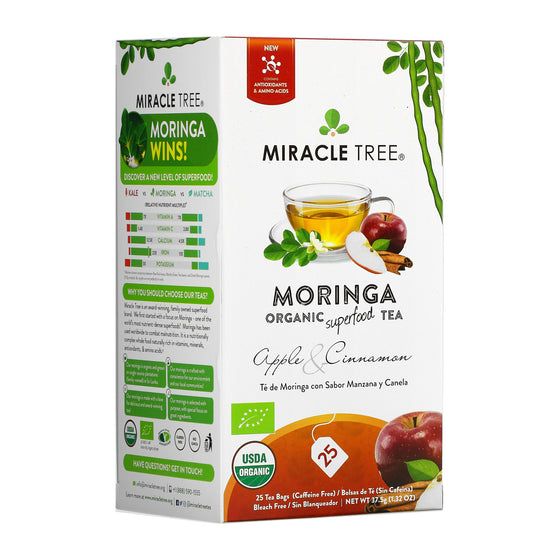

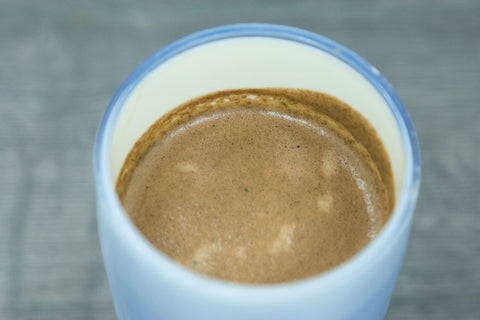


Mix into smoothies, lattes and baking. The price is already marked down, no code needed.


Miracle Tree's Blog
Moringa vs Matcha: How to Choose, and How to Swap
 By Kunal Mirchandani
· 8 min read
A practical guide: which one suits which moment, how to substitute one for the other without ruining the recipe, and what actually changes when you swap.
Is moringa the same as matcha? No. Matcha is powdered green tea, with roughly 60–70 mg of caffeine per 2 g serving. Moringa is the dried, milled leaf of the Moringa oleifera tree, with no caffeine at all. Both are bright green powders, which is why they get mixed up, but they come from different plants and taste different.
Most moringa-versus-matcha writing declares a winner. That's the wrong shape for the question, because the two are used at different times of day, for different reasons, in different recipes. This is the practical version: when to reach for which, and how to swap.
The Thirty-Second Version
- Matcha is powdered green tea. It contains caffeine (roughly 60–70 mg per 2 g serving), it's rich in EGCG and L-theanine, and it tastes intensely umami — grassy, marine, creamy.
- Moringa is a dried tree leaf. It contains no caffeine at all, it is a source of protein, calcium and iron, and it tastes lighter — green and faintly peppery.
- Matcha is better if you want caffeine or those specific tea compounds. Moringa is better if you want the minerals, the evening drinkability or the cooking range.
How They Taste
Moringa tastes like a green vegetable, because it is one: closest to fresh spinach or young peas, with a faint peppery finish. It works well with fruit (pineapple, mango, citrus, berries) and with cocoa, and it disappears into a soup or a dressing.
Matcha tastes like tea: grassy and umami-heavy, with a bitterness that runs from pleasant to harsh depending on the grade and the water temperature. Good matcha whisked at about 175°F / 80°C is smooth; cheap matcha in boiling water is astringent. Matcha is the harder one to get right.

Try moringa tea


Which One for Which Moment
First thing in the morning
If you want caffeine, matcha — or our naturally caffeinated Energy Teas, which are built on moringa leaf with caffeine from organic black tea extract. If you'd rather not start the day on a stimulant, Original Moringa is clean and grassy, with no caffeine at all.
Mid-afternoon
This is where the swap usually pays off. Caffeine has a half-life of about five hours, so a 4 p.m. matcha is still half in your system at 9 p.m. A caffeine-free moringa gives you the same warm-cup habit with no consequence for sleep.
Evening
Moringa, or nothing. Lemon Chamomile and Rooibos are the two we'd point you at.
In a smoothie
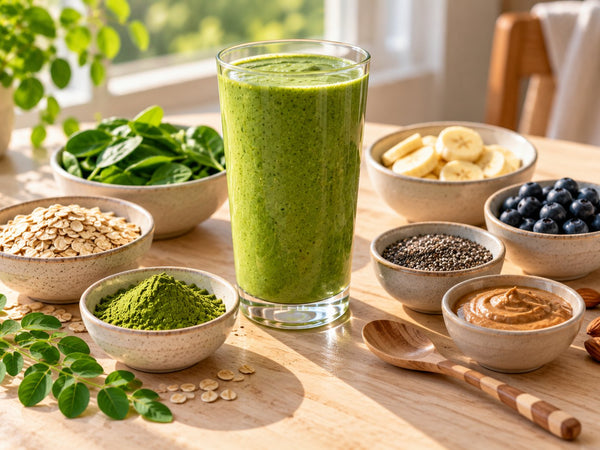
Either works. Moringa's flavour is more neutral and disappears more readily behind fruit; matcha's umami tends to assert itself and pairs best with banana, coconut or something creamy. Moringa is markedly cheaper per serving if this is a daily habit.
In baking
Moringa, comfortably. Heat mutes its green note while the colour holds, so it works in muffins, quick breads, pancakes and doughs without dominating. Matcha in baking needs sugar and fat to balance its bitterness — which is why matcha desserts skew rich.
In savoury cooking
Moringa, and it isn't close. It began as a vegetable, and it behaves like one: it belongs in soups, dals, curries, pesto and dressings. Matcha in savoury food is a specialist move.
How to Actually Swap
Matcha to moringa
- Use about the same quantity by volume — 1 to 2 teaspoons. Moringa is lighter and less concentrated in flavour, so you can be generous without it taking over.
- Drop the whisk temperature. Matcha wants water around 175°F / 80°C to avoid scorching. Moringa doesn't care — use freshly boiled water.
- Expect a different colour. Moringa brews to a softer olive-green rather than matcha's fluorescent jade. It's the leaf, not a defect.
- Expect the caffeine to be gone. This is the real change. If matcha was doing a job for you at 8 a.m., moringa won't do that job — reach for our Energy Teas instead.
- In a latte: moringa suspends less readily than stone-ground matcha. Whisk it into a small amount of hot water first to make a paste, then add the milk.
Moringa to matcha
- Halve the quantity to start. Matcha's flavour is much more forward, and a matched volume usually overshoots.
- Add sweetness if the recipe had none — matcha's bitterness needs somewhere to go.
- Move it earlier in the day, for the obvious reason.
Where They Come From
Matcha
Matcha is powdered green tea, made from Camellia sinensis — the same species as black, oolong and white tea. What makes it matcha is the growing and the processing. The plants are shaded for roughly three to four weeks before harvest, which slows photosynthesis, raises chlorophyll and L-theanine and produces the vivid green and the characteristic savoury depth. The leaves are steamed immediately after picking to halt oxidation, dried, destemmed and deveined into tencha, then ground — traditionally on granite stone mills, slowly, to avoid heat damage. Unlike a steeped tea, you consume the whole leaf.
Moringa
Moringa is the leaf of Moringa oleifera, a fast-growing tree native to the foothills of the Indian subcontinent, known locally as the drumstick tree, the horseradish tree, or the miracle tree. It has been a food crop in South Asia and across the tropics for centuries, and it isn't tea in any botanical sense — the resemblance is entirely in the cup.
Miracle Tree's leaf is hand-picked on family-owned farms in Sri Lanka's rainforest belt, solar-dried, then cut for tea bags or milled whole into powder. Nothing is extracted or concentrated. The farms are USDA and EU Organic certified, every batch is third-party lab tested, and we buy direct under a bought-leaf model that returns up to 70% of the purchase value to the growers.
Nutrients, Side by Side
One sourced basis, per 100 g of each powder as sold: moringa leaf powder from Gopalakrishnan et al. (2016), matcha from Japan’s MEXT food composition tables. A real serving is only a few grams (2 teaspoons of moringa powder is about 4 g; a matcha serving is 1–2 g), so compare the columns with each other, not with your daily needs.
| Per 100 g | Moringa leaf powder | Matcha |
|---|---|---|
| Caffeine | None (caffeine-free) | Yes, about 60–70 mg per 2 g serving |
| Protein | 27.1 g | 29.6 g |
| Calcium | 2,003 mg | 420 mg |
| Iron | 28.2 mg | 17.0 mg |
| Potassium | 1,324 mg | 2,700 mg |
| Vitamin C | 17.3 mg | 60 mg |
| Signature compounds | Quercetin, chlorogenic acid | EGCG and other catechins, L-theanine |
Moringa does not win every row. Matcha has slightly more protein, about twice the potassium and more vitamin C, and it is the far richer source of catechins such as EGCG and of L-theanine, which is largely specific to tea. Moringa’s clear advantages are calcium (nearly five times as much), iron, and no caffeine at all.
Cost, Which Nobody Mentions
Good ceremonial matcha is expensive, and cheap matcha is genuinely unpleasant — the quality floor is high and the price scales steeply with it. Moringa has a much flatter curve: the difference between adequate and excellent is mostly about sourcing, drying method and freshness rather than a grading system with a tenfold price spread. If you're building a daily habit rather than an occasional ritual, that difference compounds.
Our Honest Position
We make moringa, so weigh the following accordingly — but we'd rather say it than not: matcha is very good at what it does. Its catechin and L-theanine content is genuinely distinctive, the ritual around it is centuries deep, and if you love the flavour that's a complete answer on its own. Moringa isn't a replacement for matcha. It's a different leaf that is richer in calcium and iron, drinkable later at night, and far more useful in a saucepan.
Plenty of people keep both. That's a reasonable place to land.
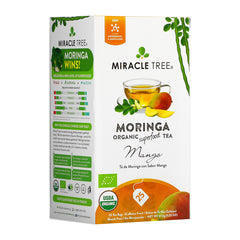
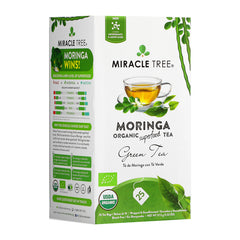
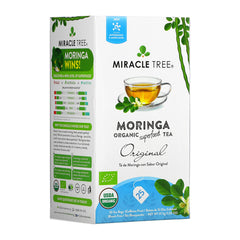
Browse our Herbal Moringa Teas, our Superfood Powders, or find recipes on the recipe blog.
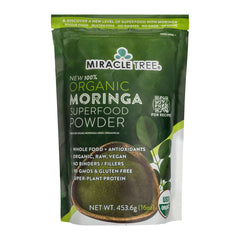
Ready to try the swap? Start with our organic moringa powder, then see our moringa powder guide and the moringa FAQ.
Sources
- Leone, A. et al. (2015). Cultivation, Genetic, Ethnopharmacology, Phytochemistry and Pharmacology of Moringa oleifera Leaves: An Overview. International Journal of Molecular Sciences, 16(6), 12791–12835.
- Jakubczyk, K. et al. (2020). Antioxidant Properties and Caffeine Content of Matcha Green Tea. Foods, 9(4), 483.
- Kochman, J. et al. (2021). Health Benefits and Chemical Composition of Matcha Green Tea: A Review. Molecules, 26(1), 85.
- Gopalakrishnan, L., Doriya, K., & Kumar, D. S. (2016). Moringa oleifera: A review on nutritive importance and its medicinal application. Food Science and Human Wellness, 5(2), 49–56.
- MEXT (2020). Standard Tables of Food Composition in Japan, 8th ed.
These statements have not been evaluated by the Food and Drug Administration. This product is not intended to diagnose, treat, cure, or prevent any disease.
Always consult a healthcare professional before making changes to your diet, especially if you are pregnant, nursing, or managing a medical condition.

Shop the products in this article
View all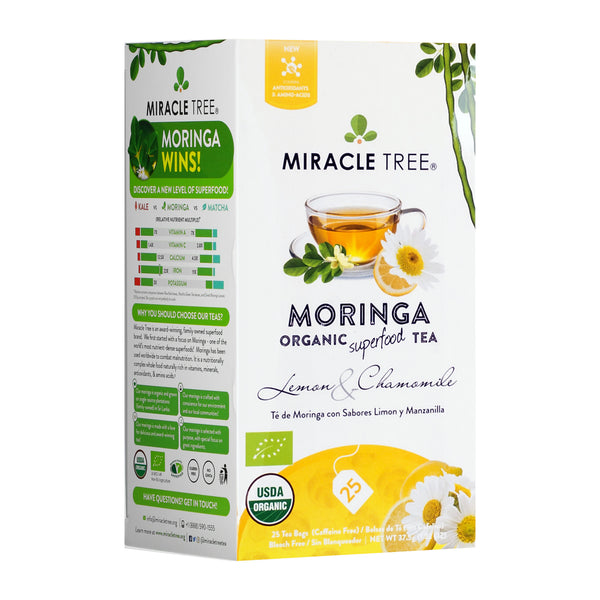

Organic Moringa Powder - 8oz Canister
From £10.00
Shop: Organic Moringa Powder - 8oz Canister
Important Reminders
Remember to always consult your healthcare provider before making any significant changes to your diet. While moringa is generally safe for consumption, it's essential to be aware of any potential allergies or interactions with medications.


