Most New Year resolutions fail for a boring reason: they ask you to add a new decision to your day. Anything that requires you to remember, weigh up and choose it every morning is competing with a schedule that is already full. Habits that survive January are the ones that attach themselves to something you already do without thinking.
That is the frame we would suggest for moringa. Not "add a superfood to my life" — too vague to act on — but "put a teaspoon in the smoothie I already make on weekdays." Below are four places moringa attaches cleanly to an existing routine, with the amounts, the flavor notes, and the one mistake that puts people off it in week one.
What moringa actually is
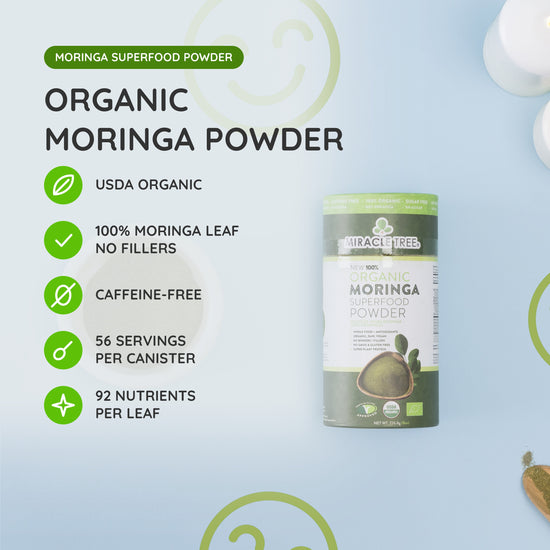
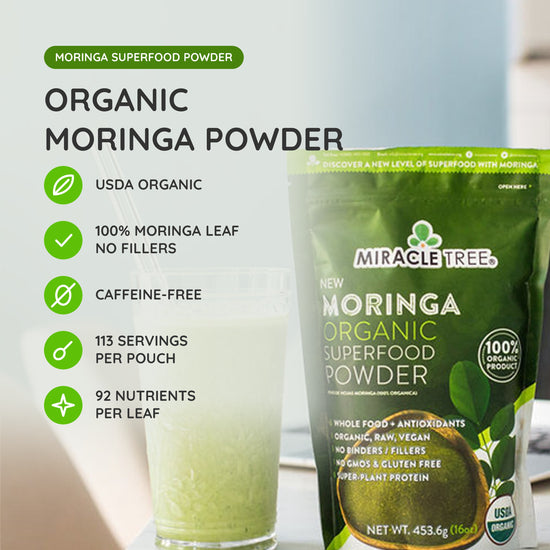
Moringa oleifera is a fast-growing tree native to South Asia, and its leaves have been eaten as an everyday vegetable for centuries across India, Sri Lanka and West Africa. Dried and milled, the leaf is nutritionally dense in a way that is unusual for a green: 47 antioxidant compounds, 25 vitamins and minerals, and all nine essential amino acids, which most leafy greens do not provide.
Two practical things worth knowing before you start. First, it is naturally caffeine-free, so it fits at any hour — this is the main reason people who like matcha but want something without caffeine end up here. Second, it tastes green. Closer to matcha, spinach or fresh peas than to anything sweet, with a faintly savory finish. Ours is grown on organic farms in Sri Lanka and shade-dried rather than heat-dried, which is what keeps the powder bright green instead of dull khaki — color is a reasonable proxy for how carefully a moringa powder was handled.
Four places it fits into a day you already have
1. The morning smoothie
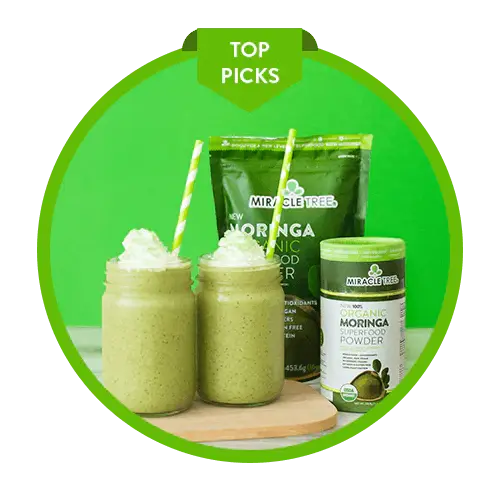
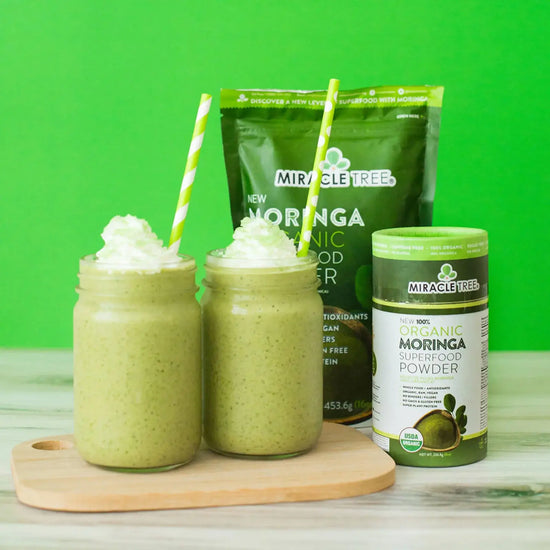
Blend a handful of spinach, one ripe banana, one teaspoon of Moringa Superfood Powder, and a cup of almond milk. The banana matters more than it looks — moringa's savory edge needs something sweet and something fatty to sit against, and a ripe banana provides both body and sugar.
If you want to make this a habit rather than a project, portion the dry ingredients into freezer bags on Sunday. Then the weekday version is: tip bag into blender, add milk, press button.
2. On top of food you have already cooked
Moringa's flavor is at its best in savory contexts. Stir a teaspoon into a finished soup, sprinkle it over roasted vegetables, or whisk it into a lemon-and-olive-oil dressing where the acid brightens it.
The one mistake to avoid: do not boil it. Prolonged high heat dulls both the color and the flavor, and turns a fresh green dish a murky olive. Add moringa at the end of cooking, off the heat, the way you would treat fresh herbs.
3. The evening cup
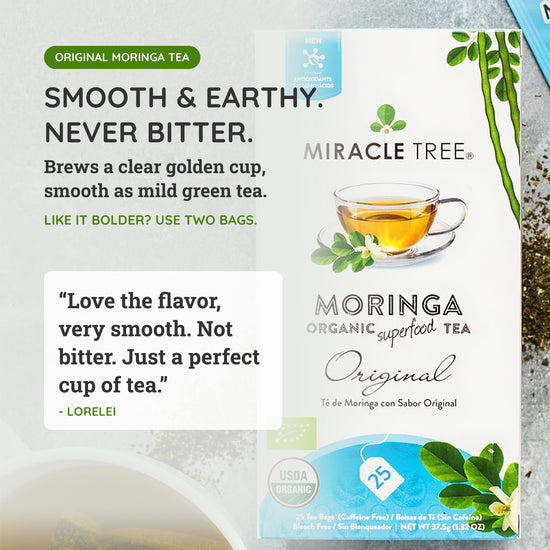
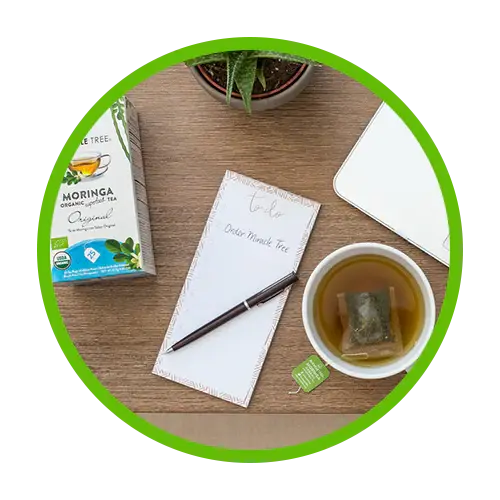
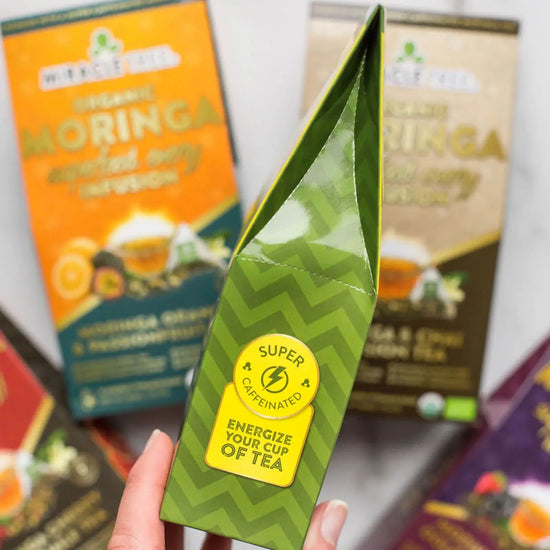
This is where the caffeine-free part earns its keep. A cup of moringa tea at 9pm is a real option in a way that green tea is not. Steep for 3–5 minutes at full boil — unlike green tea, moringa will not turn bitter on a long steep, so it is genuinely hard to get wrong. A squeeze of lemon lifts it; a little honey rounds it.
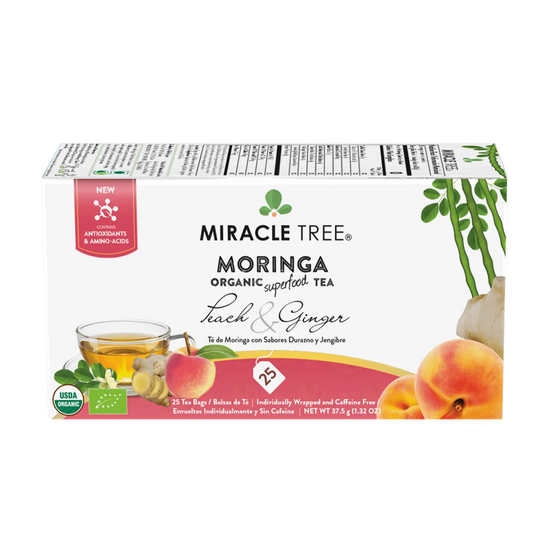
If you are new to the leaf, start with a blend rather than plain moringa. Lemon & Chamomile and Honey & Vanilla are the two most people find easiest to like on the first cup.
4. Baking, with a caveat
A tablespoon of moringa powder in pancake or muffin batter gives a striking green color and an earthy note that works particularly well with banana, coconut and dark chocolate. Be honest about the trade-off, though: baking is the one application where the heat is long and hot enough to mute the flavor. Do it for the color and the novelty, and get your nutrition from the applications above.
Make the target smaller than feels satisfying
One teaspoon, one time of day, five days a week. That is a target you will still be hitting in March, which is the only measure of a resolution that means anything. Ambitious plans that collapse in week three deliver less than modest plans that don't.
Moringa is a nutrient-dense addition to meals you are already eating — not a replacement for them, and not a shortcut past the rest of a balanced diet. Treated that way, it is one of the easier good habits to keep.
These statements have not been evaluated by the Food and Drug Administration. This product is not intended to diagnose, treat, cure, or prevent any disease.
Always consult a healthcare professional before making changes to your diet, especially if you are pregnant, nursing, or managing a medical condition.