Two green superfoods, side by side — with the actual numbers.
Moringa, which you may know as the drumstick tree, gets compared to kale constantly. It is an easy comparison to make and a lazy one to leave there: both are green, both wear the "superfood" label, and that is roughly where the similarity ends. One is a cruciferous vegetable eaten fresh; the other is a tree leaf eaten dried. Below is what actually separates them.
Kale
Kale earned its reputation honestly. It is genuinely nutrient-dense, it is versatile — steamed, braised, roasted, massaged raw — and it is available everywhere from a farmers' market to a big-box store, harvested largely in the United States and parts of Europe. Nutritionally it is high in vitamin C, vitamin K, beta-carotene, calcium and fiber, and it belongs to the same cruciferous family as broccoli, cauliflower and Brussels sprouts, which is where its sulfurous, slightly bitter edge comes from.
It is worth noting that a 2014 TIME piece argued kale is a health food rather than a superfood — nutritious and worth eating, but not exceptional against the field. Chia seeds and goji berries have taken the same criticism.
Moringa
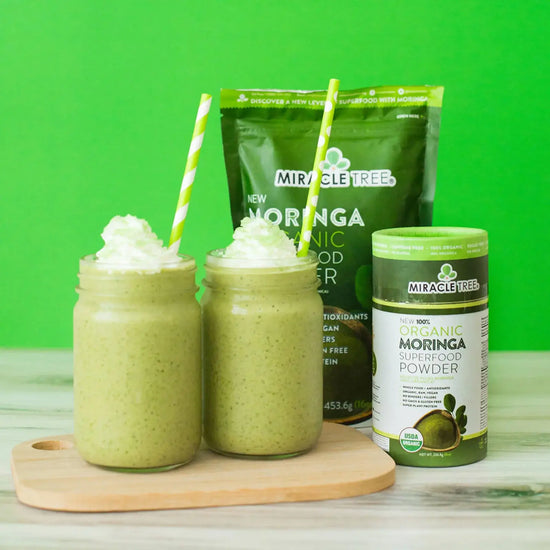
Moringa oleifera is a fast-growing tree native to the Indian subcontinent. It can put on fifteen feet in its first year, tolerates drought and poor soil, and holds its nutrition while doing it — which is why it is grown across the tropics and why it earned nicknames like "the tree of life" and "the never-die tree." Miracle Tree's leaf is single-origin Sri Lankan: hand-picked, solar-dried and milled whole, with nothing extracted and nothing added.
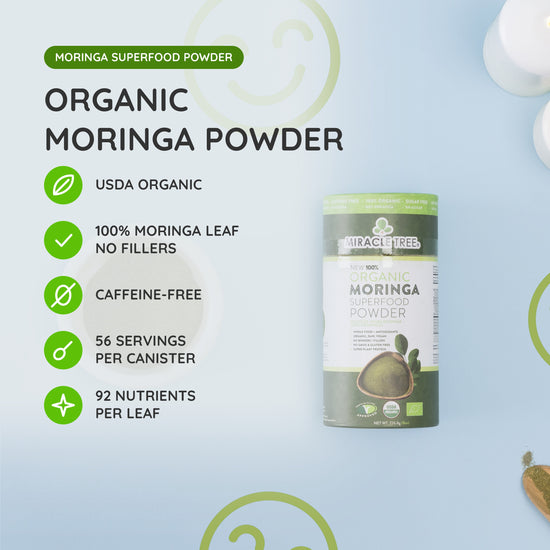
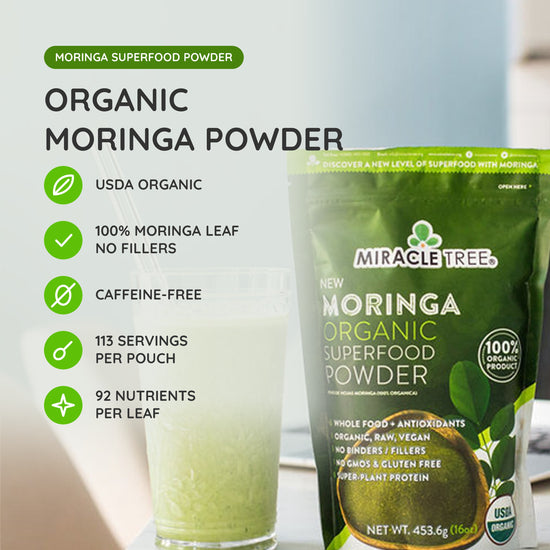
The leaf carries 92 nutrients, 47 antioxidants and all nine essential amino acids, which makes it a complete plant protein — vitamins A, B1, B2, B3, B6, B7, C, D, E and K, plus calcium, iron, potassium, magnesium, fiber, and phytonutrients including alpha- and beta-carotene, lutein, zeaxanthin and chlorophyll.
The numbers, per 100 g dried leaf
Per 100 g, dried moringa leaf contains 27 g of protein, 2,000 mg of calcium and 28 mg of iron. Gram for gram, dried moringa leaf powder has about 17x the calcium of milk, 10x the iron of spinach, 7x the protein of yogurt and 3x the potassium of bananas. Those are dried-leaf figures set against fresh foods that are mostly water, so a teaspoon contributes a useful share rather than a day's supply.
Two differences beyond the numbers
Whole leaf, nothing extracted
Matcha and spirulina are processed and concentrated. Moringa powder is simply the dried leaf, milled — the full nutrient profile as it grew, rather than an isolate.
Flavor and format
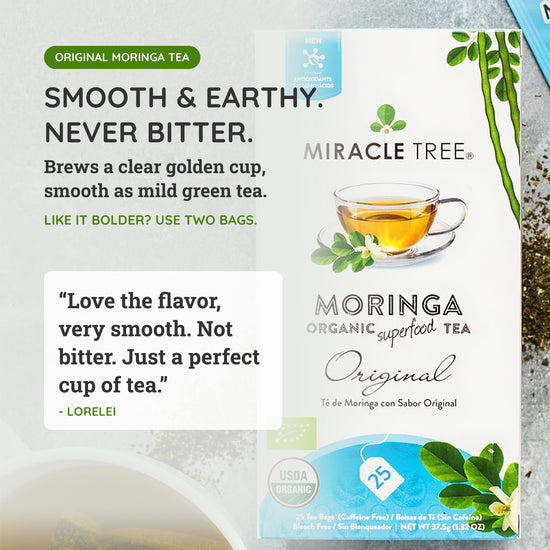
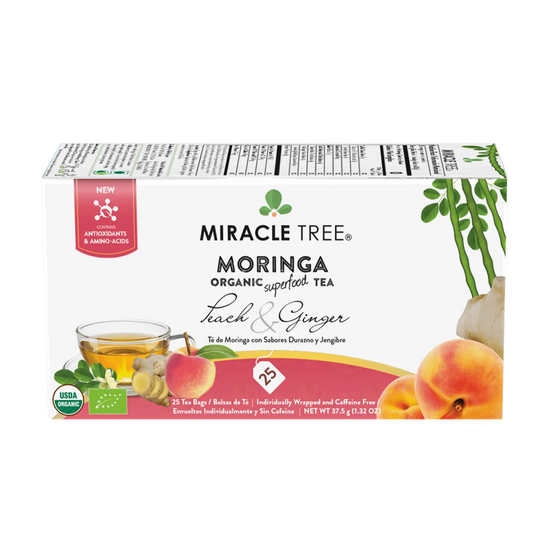
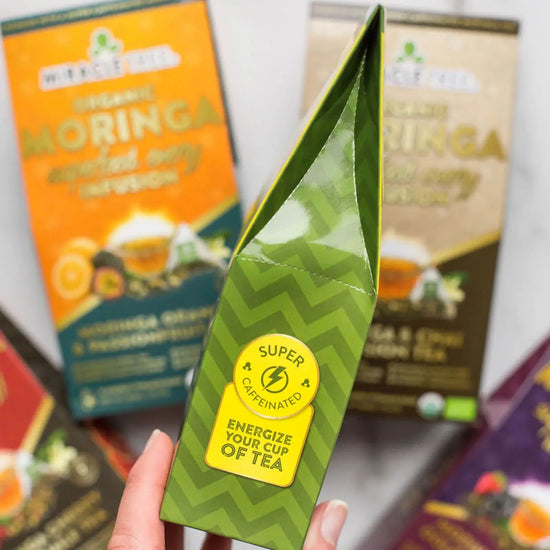
Kale is bitter and sulfurous, and it needs heat, fat or acid to be enjoyable. Moringa leaf tastes green and gently peppery — closer to a mellow matcha than to a brassica — and because it dries well it can be brewed. That is the practical difference most people notice first: you can drink moringa. Miracle Tree offers a range of organic moringa herbal teas, from chocolate to mango, all naturally caffeine-free.
So which one?
Both. Kale is a vegetable and moringa is a concentrated dried leaf; they do different jobs on a plate. But if the question is nutrient density per gram, moringa is the more remarkable of the two — and it is far easier to get a teaspoon of it into a day than a bowl of kale.
Read our full moringa vs. superfoods comparison, or browse the tea range to find a flavor to start with.
These statements have not been evaluated by the Food and Drug Administration. This product is not intended to diagnose, treat, cure, or prevent any disease.
Always consult a healthcare professional before making changes to your diet, especially if you are pregnant, nursing, or managing a medical condition.